Dual Agency: What Buyers and Sellers Should Know
Would You Hire the Same Attorney to Represent Both Sides in a Lawsuit?
That question stops most people cold — and for good reason.
When you're in a legal dispute, you expect your attorney to be fully and exclusively committed to your interests. The idea of sharing that attorney with the opposing party would be unthinkable.
Yet in real estate, that scenario plays out more often than consumers realize.
Dual agency in Pennsylvania real estate occurs when a single agent represents both the home seller and the home buyer in the same transaction. It is permitted under Pennsylvania law — but only with written consent from both parties. And while it may appear convenient on the surface, it carries meaningful trade-offs that every buyer and seller in Montgomery County and the surrounding communities should understand before agreeing to it.
How Agency Works in Pennsylvania — and Why It Matters
Before discussing your finances or motivations with a real estate professional in Pennsylvania, they are required by law to provide you with a Consumer Notice. This document outlines the types of representation available to you under state law.
There are four primary options:
Seller's Agent Represents the seller exclusively. Their job is to secure the highest possible price, negotiate favorable contract terms, and protect the seller's confidential information throughout the transaction.
Buyer's Agent Represents the buyer exclusively. Their responsibility is to negotiate the lowest possible price, protect the buyer's financial position, and keep the buyer's motivations confidential.
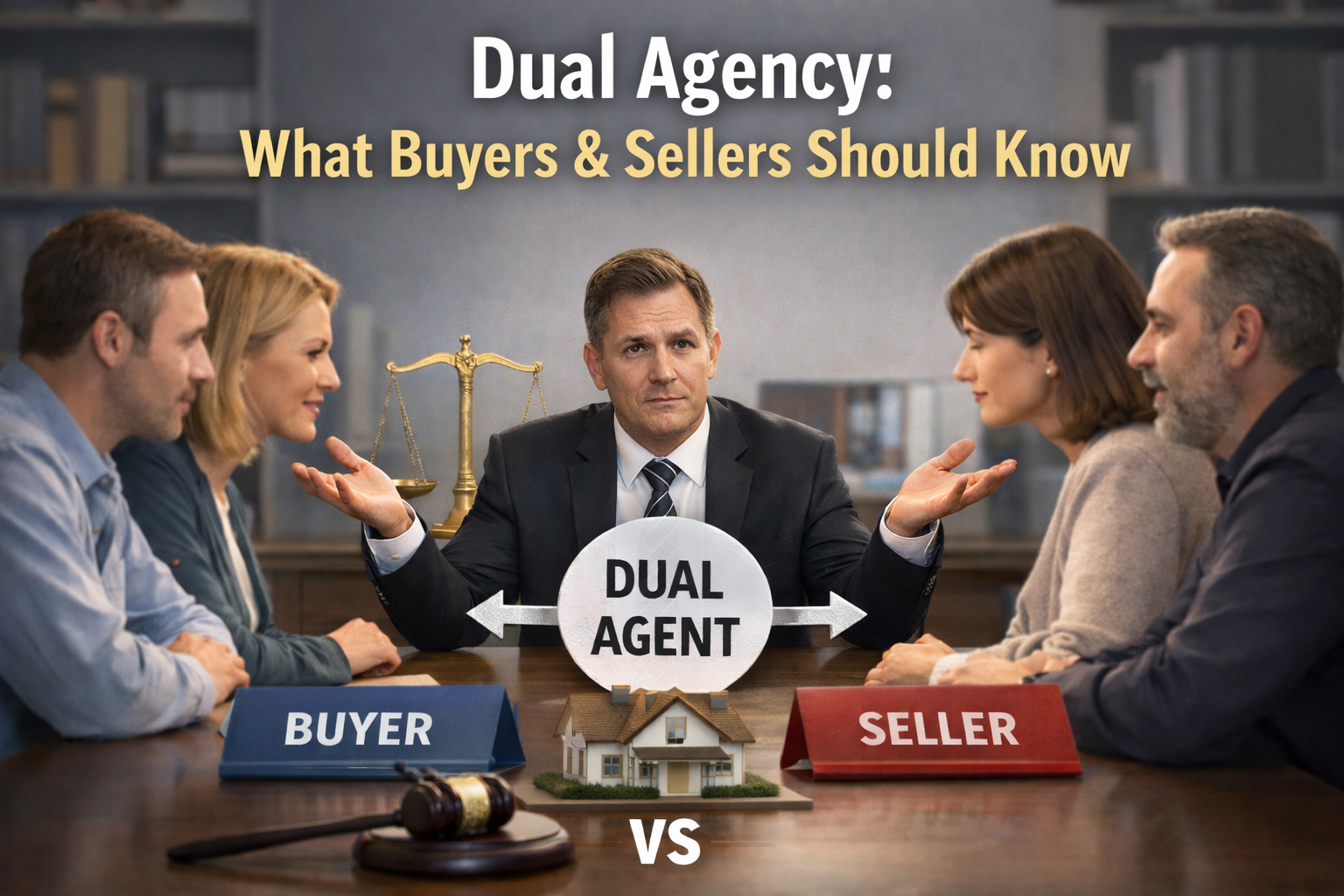
Dual Agent One agent represents both the buyer and the seller in the same transaction. This arrangement is legal in Pennsylvania with written consent — but it comes with significant limitations on what that agent can do for either party.
Designated Agency (Pennsylvania-Specific) Two different agents within the same brokerage represent the buyer and seller separately. Each agent owes full loyalty to their own client. This structure reduces the conflict inherent in dual agency while keeping the transaction within one brokerage.
Understanding these distinctions before signing any agreement is essential.
What Fiduciary Duty Means in Pennsylvania Real Estate
When you hire a buyer's agent or seller's agent in Pennsylvania, that agent owes you fiduciary duties under state law. These duties include:
- Loyalty
- Confidentiality
- Full disclosure
- Reasonable care
- Obedience
- Accounting
In plain terms: your agent is legally and ethically required to put your interests first — above their own, and above anyone else's in the transaction.
That standard becomes difficult to uphold in a dual agency arrangement.
The Core Conflict: One Agent Cannot Fully Serve Two Opposing Clients
Consider a home listed at $600,000 in Montgomery County.
If an agent represents the seller, their goal is to:
- Attract strong offers
- Encourage competitive bidding
- Minimize concessions
If that same agent represents the buyer, their goal is to:
- Negotiate the price down
- Secure credits or repairs
- Protect the buyer's negotiating position
These objectives are directly at odds. No single agent can simultaneously pursue the strongest price for a seller and the lowest price for a buyer.
In a dual agency situation, the agent is required to become neutral — meaning no strategic advice that could disadvantage either side, no sharing of confidential information that could benefit one party, and no aggressive advocacy for either client.
The distinction matters: you are no longer working with an advocate. You are working with a facilitator. In a transaction involving hundreds of thousands of dollars, that difference is significant.
What "Limited Confidentiality" Looks Like in Practice
Here is a straightforward example of how dual agency affects real negotiations:
- A seller tells the agent they would accept less than the asking price if necessary.
- A buyer tells the agent they are willing to go significantly higher if needed.
In a dual agency situation, the agent cannot use either piece of information to benefit one party without harming the other. So the agent stays neutral — and both sides negotiate without the benefit of a knowledgeable advocate guiding their strategy.
In most real estate negotiations, neutrality is not a feature. It is a constraint.
Real Market Scenarios in Montgomery County
Here is how dual agency plays out in practical terms across competitive communities like Collegeville, Phoenixville, and Lower Providence.
Multiple Offer Situations
In active suburban markets, multiple offers are common. When one agent represents both buyer and seller in a competing offer environment, critical questions arise: Should the seller be advised to counter higher? Should the buyer be encouraged to escalate or waive contingencies? In dual agency, the agent cannot answer those questions fully for either party.
Inspection Negotiations
When a home inspection reveals elevated radon levels, an aging HVAC system, or roof concerns, the seller wants to minimize concessions while the buyer wants meaningful credits or repairs. A dual agent cannot advocate for either outcome. Both parties enter that negotiation without a dedicated advisor in their corner.
Appraisal Gap Scenarios
If a property appraises below the contract price, the question of whether the seller reduces the price, the buyer covers the gap, or both parties split the difference requires frank, strategic conversation. A dual agent cannot push hard for any resolution that favors one side. The result is often a less effective negotiation for everyone involved.
The Illusion of Convenience
Many consumers are drawn to dual agency because it seems simpler — fewer agents, smoother communication, perhaps even the sense that the deal will move faster. And in some cases, it might.
But what feels convenient often comes at a cost. Specifically, buyers and sellers in a dual agency arrangement may be giving up:
- Strategic negotiation guidance
- Full fiduciary advocacy
- Confidential advice on pricing and positioning
- Leverage in critical moments of the transaction
Real estate is not just paperwork and logistics. It involves strategy, psychology, timing, and negotiation — often under emotional and financial pressure. Convenience should not replace representation.
Dual Agency vs. Designated Agency in Pennsylvania
It is worth clarifying an important distinction that Pennsylvania law provides.
In dual agency, one agent represents both parties and must remain neutral throughout the transaction.
In designated agency, two different agents within the same brokerage each represent their own client. Each agent maintains full fiduciary duties to their respective party — including loyalty, confidentiality, and the ability to advocate openly. Designated agency attempts to preserve the benefits of representation even when both sides are working with the same brokerage.
For many consumers, designated agency offers a meaningful improvement over dual agency. Understanding the difference is part of making an informed decision before any agreements are signed.
Legal Does Not Always Mean in Your Best Interest
Pennsylvania law permits dual agency with written consent. That is a fact. But legality does not resolve the underlying conflict of interest, and it does not guarantee that both parties received the representation they deserved.
The better question to ask is not simply whether dual agency is allowed. The better question is whether it protects your interests in one of the largest financial transactions of your life.
You Deserve Someone Fully in Your Corner
Buying or selling a home in Montgomery County or the surrounding communities involves large sums of money, emotional decisions, legally binding contracts, and negotiation under pressure. In that environment, divided attention carries real risk.
If you are considering a real estate transaction and are asked to consent to dual agency, take time to fully understand what that agreement means for your representation. Ask your agent directly:
- Who do you represent in this transaction?
- What duties do you owe me?
- How will you advocate for my interests if a conflict arises?
The answers matter. Because when it comes to your home, you deserve an advisor who is fully committed to your outcome — not one standing in the middle of it.
Considering a home purchase or sale in Montgomery County? Before agreeing to any form of representation, make sure you fully understand your options and how they affect your protection at the negotiating table. If you’d like clear guidance tailored to your situation, I’m here to help. Reach out anytime for a confidential, no-obligation conversation.
Categories
Recent Posts